
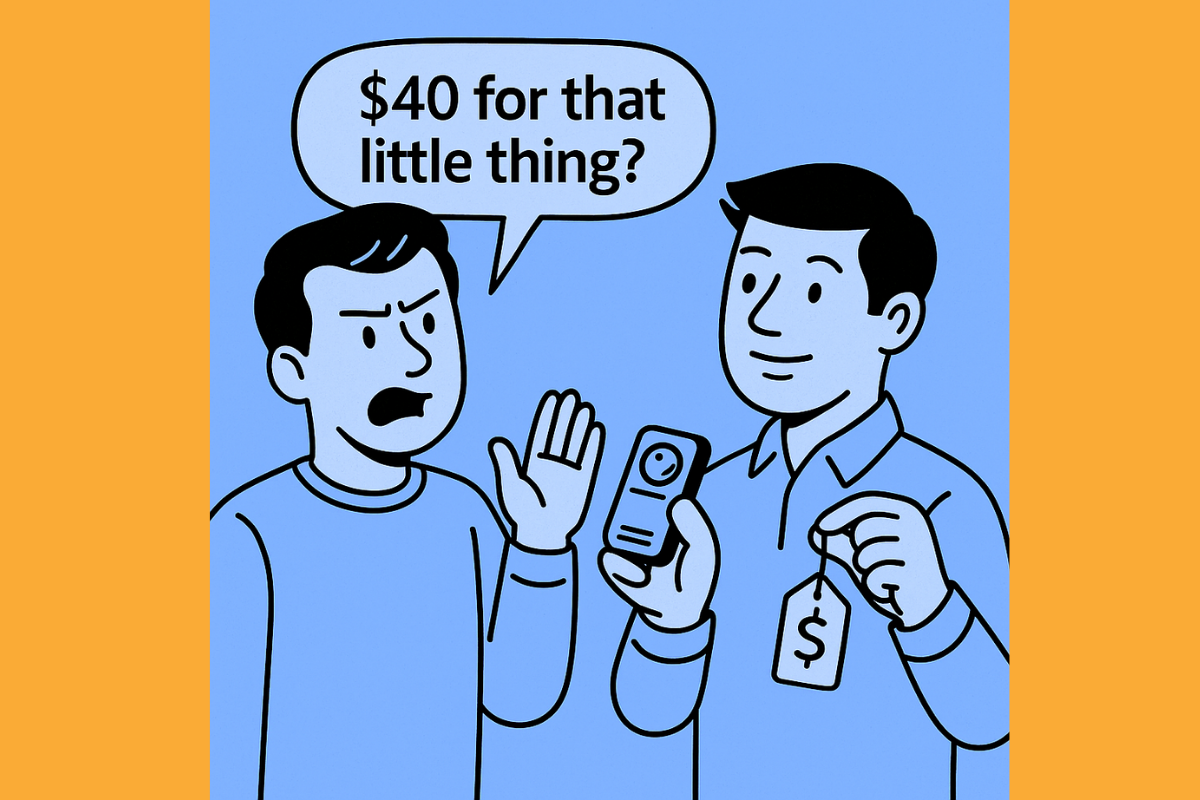
How to Know If Your Amazon Product Is Overpriced
Most Amazon sellers worry about being too cheap.
But being overpriced can quietly damage your ranking, advertising efficiency, and long term growth.
The tricky part is this.
Overpricing does not always show up as a sudden collapse in sales.
Sometimes it shows up as friction.
Here are three clear signals your Amazon product may be overpriced, how to measure them, and what to do next.
What Does It Mean to Be Overpriced on Amazon
An Amazon product is overpriced when customer behavior signals that the perceived value of the offer does not match the asking price.
This mismatch often shows up in:
-
Lower than expected click through rate
-
Weak conversion rate
-
Rising advertising costs
-
Subtle negative review language
Being overpriced does not mean your product is bad.
It means the price to value ratio feels misaligned relative to competitors or buyer expectations.
Smart Amazon brands treat this as market feedback, not failure.
1. Low Click Through Rate and Low Conversion Rate
If shoppers are not clicking your listing and not converting at competitive rates, price may be a contributing factor.
Low CTR suggests your listing is not compelling in search results.
Low CVR suggests that once shoppers land on your page, the offer does not justify the price.
Price is not always the only cause, but it is often part of the equation.
How to Determine What “Low” Actually Means
Metrics only matter in context.
Method 1
Seller Central → Brand Analytics → Search Analytics → Top Search Terms
Compare your conversion rate by keyword against the top three competitors ranking for the same term.
If you are significantly below them on high intent keywords, pricing may be influencing buyer hesitation.
Method 2
Ads Console → Campaign Manager → Insights and Planning → Brand Metrics
Click “View detailed metrics for your brand in this category.”
Evaluate:
-
Your conversion rate versus the category median
-
Your conversion rate versus top performers
If you trail both consistently, investigate price alignment.
Method 3
Industry Benchmarks
Many agencies report approximately:
-
1 percent CTR as typical in many categories
-
10 percent CVR as a common average benchmark
If you are materially below those figures and competitors are outperforming you, pricing deserves scrutiny.
2. Reviews Suggest the Product Is Not Worth the Price
You do not need dozens of complaints.
Just a few recurring comments such as:
-
Smaller than expected
-
Quality did not match the price
-
Not worth it
These phrases indicate friction between price and perceived value.
Reviews are qualitative data.
They reveal emotional reactions that metrics alone cannot capture.
When price resistance appears in review language, it is often an early warning signal.
Amazon brands that monitor review sentiment closely can correct course before ranking damage compounds.
3. High ACOS or Low ROAS
If your advertising is working harder just to maintain the same sales volume, pricing may be part of the issue.
Examples include:
-
Rising ACOS over time
-
Declining ROAS despite stable traffic
-
Needing increased ad spend to maintain rank
If you must continuously push traffic with higher bids to sustain sales, your price may be creating conversion resistance.
Advertising can mask pricing issues temporarily.
It cannot fix them permanently.
When Price Is Creating Friction
If multiple signals suggest underperformance, do not panic and slash price immediately.
Overpricing is rarely about being “too expensive” in isolation. It is about misalignment between price and perceived value.
Before reducing price, ask:
Is the offer strong enough to justify the current positioning?
Have competitors shifted meaningfully?
Is traffic quality part of the issue?
Sometimes a modest adjustment restores alignment.
Sometimes improving the offer does.
The key is not to react emotionally.
It is to respond deliberately.
Common Misconceptions About Overpricing
If sales are steady, I am not overpriced
Not necessarily. You may be maintaining volume through heavy advertising or brand momentum while sacrificing margin efficiency.
Lowering price always increases profit
Not always. Increased volume does not guarantee higher net profit. Clean comparison is essential.
Competitors are cheaper, so I must match them
Price should reflect your positioning, review strength, and brand equity. Competing purely on lowest price is rarely a sustainable strategy.
Final Thoughts
If your listing underperforms competitors on click through rate and conversion, receives subtle price related review feedback, and requires increasing ad spend to hold position, the market may be signaling resistance.
That is not a crisis.
It is information.
Most Amazon sellers react emotionally to slow weeks.
Strategic Amazon brands test methodically and adjust based on measured elasticity.
Before making dramatic changes, test.
Small, controlled experiments reveal whether price is truly the constraint.
ProvenPrice is a dedicated Amazon price testing platform that helps Amazon brands run structured price experiments, measure conversion and profit impact accurately, and make confident pricing decisions instead of reactive ones.